
The cleanest business lesson from roulette is uncomfortable: some outcomes simply do not care how smart you are. You can model the market, hire well, tighten operations and still get mugged by timing, regulation, weather or a competitor doing something stupid at exactly the wrong moment.
That is not a reason to panic. It is a reason to stop pretending control is bigger than it is. Once you see pure chance clearly, your decisions get sharper. You stop over-crediting yourself for lucky wins. You stop treating one ugly quarter like a permanent verdict. And you build plans that survive the fact that the world is messy.
Chance is not the same as failure
A roulette wheel is brutally honest. Each spin stands on its own. The last result does not lean on the next one. If red has landed five times in a row, that does not make black more likely on the sixth spin. The wheel does not remember.
Business leaders make the same mistake when they read patterns into places where none exist. A product launch lands badly, and suddenly the team speaks as if the idea was cursed. A sales run goes well, and the deck gets rewritten as if the market had issued a permanent blessing. Both reactions are lazy. They confuse a single result with a durable signal.
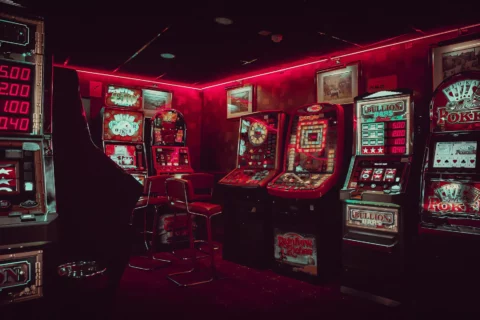
A European wheel has 37 pockets. A single number has a 1 in 37 chance, or about 2.7%, of landing on any one spin. Red or black looks tempting because the odds sit close to even, at 18 out of 37, but the green zero keeps the house ahead. If you want a direct look at the mechanics of pure chance, a roulette wheel makes the point faster than most boardroom slides ever will.
Probability beats wishful thinking
The real value of the roulette analogy is not gambling glamour. It is the discipline of probability. Once leaders accept that many outcomes are uncertain rather than controllable, the quality of their decisions improves fast.
Expected value is the first useful habit. Strip the drama out of a decision and ask what the likely outcomes are, what they cost, and how probable each one is. That is a far better lens than gut feeling dressed up as confidence. If a new product in Johannesburg can earn R2 million in the best case, break even in the middle, and lose R800 000 if demand stalls, the honest question is not whether the idea feels exciting. It is whether the weighted outcome is worth the risk.
That same logic helps with sales targets, marketing budgets and production planning. The more volatile the environment, the more useful it becomes to plan in ranges instead of fantasies. Anyone running a business in South Africa already knows this in practice. Load-shedding, port delays, exchange-rate swings and a sudden policy shift can scramble a tidy forecast in a single week. The smart response is not to predict the unplannable with fake certainty. It is to price uncertainty into the plan.
Skill still matters, but not everywhere
Roulette also draws a hard line between skill and luck. Some business outcomes are shaped heavily by craft, such as supplier negotiations, pricing discipline, product design and execution. Others are warped by things the team did not cause and cannot directly control.
A strong marketing team can earn a result. A sudden surge in commodity prices, a transport bottleneck at the wrong port, or a competitor’s recall can change the game around them. Even the best sales team can look brilliant or average depending on the state of the economy when they hit the market.
That distinction matters because bad managers often reward the wrong thing. They praise themselves for luck and blame staff for randomness. They also miss the point of measurement. If you track the right KPIs, you can start separating repeatable skill from one-off noise. That makes performance reviews fairer and strategy less theatrical.
Confirmation bias makes this worse. Leaders search for evidence that backs their favourite story. A few winning deals become proof of genius. A few losing months become proof that the market is broken. Both can be nonsense. The cleaner habit is to ask what part of the result could have been improved by process, and what part was always vulnerable to chance.
Build for the spin you cannot control
Once you accept that some spins are outside your reach, resilience stops being a slogan and becomes a design choice. Scenario planning is one of the most useful tools here. Royal Dutch Shell used it to think through possible oil shocks in the 1970s, and the idea still works because uncertainty has not gone away. You map the likely paths, the ugly paths and the weird paths, then decide what you will do in each case.
Pre-mortems push that further. Before launch, imagine the project has already failed. Then ask why. A nasty competitor move, a social media backlash, a supplier failure, a cash squeeze, a missed dependency. The point is not pessimism. The point is to catch the obvious holes before the market does.
Resilience is a strategy, not a mood
Diversification is where the roulette lesson becomes practical. No serious business should rely on one supplier, one product or one customer segment if it can help it. A wider revenue base and a more flexible operation absorb shocks better than a brittle one. That is how you build a company that can keep moving when a shock lands.
There is also a more demanding idea here, the one Nassim Nicholas Taleb calls antifragility. Some systems do more than survive volatility. They get stronger from it. In business terms, that means testing small ideas, learning quickly and refusing to bet the whole company on a single forecast.
The best operators do not worship certainty. They budget for randomness, they respect probability and they keep enough room in the plan to change course without drama.
A simple checklist for the next decision
- Ask which parts of the outcome are under your control.
- Put numbers, not feelings, on the likely scenarios.
- Separate repeatable skill from random noise.
- Test the downside before you celebrate the upside.
- Build one extra layer of resilience into the plan, whether that is cash, supplier backup or a smaller initial bet.
Business does not reward the person who pretends the wheel can be controlled. It rewards the person who sees the spin for what it is, prices the risk properly and keeps enough nerve to play the next round with clearer eyes.