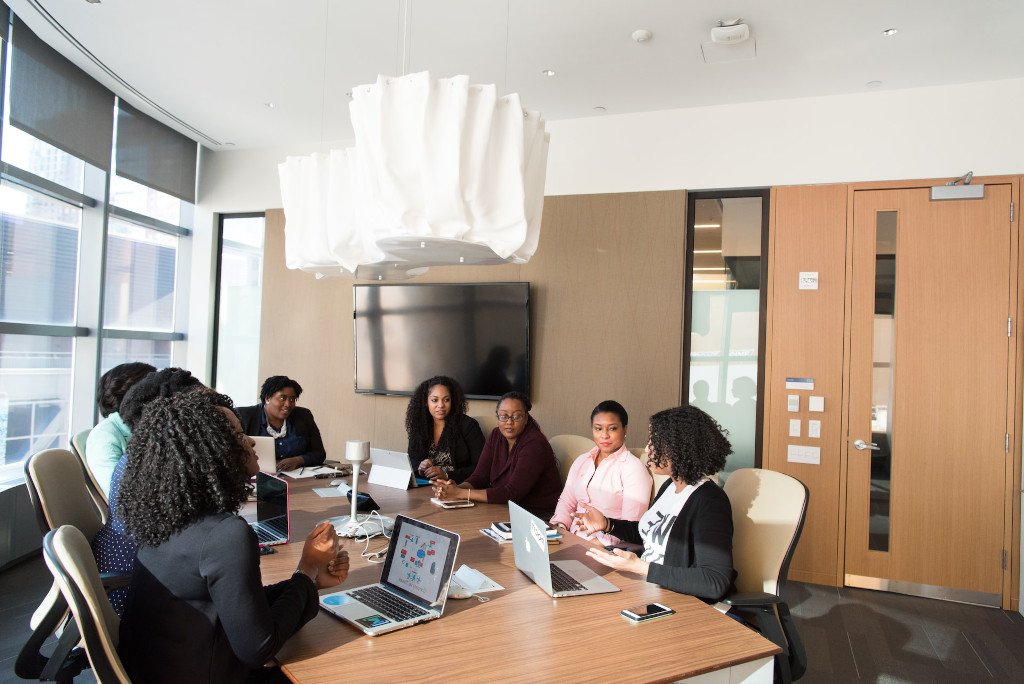
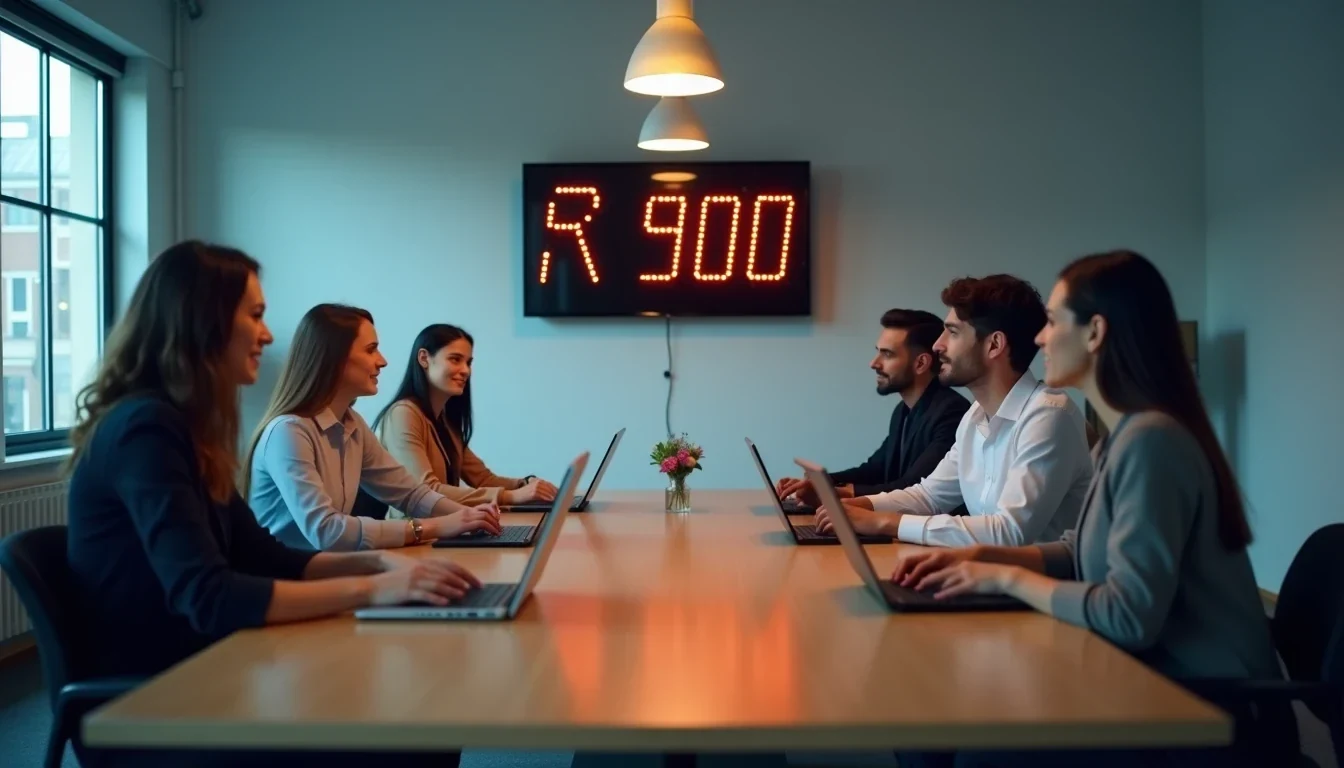
The most expensive thing in many companies is the meeting nobody bothered to cost properly. A 30-minute chat with six people at an average employment cost of R300 an hour already burns through R900 before anyone has opened a spreadsheet, answered an email, or finished the task they were supposed to be doing.
That figure is polite, almost dishonest. It ignores the time spent preparing, the work that sits untouched while everyone talks, and the half hour after the meeting when people have to drag their attention back into the real job. A meeting can look harmless on a calendar and still drain a team’s budget like a slow leak.
The price hiding in plain sight
The easiest way to price a meeting is to stop pretending the room is free. Count the people. Estimate their hourly employment cost. Multiply by the time they are out of productive work.
Using the simple example from above, six people at R300 an hour for 30 minutes gives you R900 in direct labour cost. That is the visible part. The messier part follows. Someone spent time preparing slides or numbers. Someone else dug through old emails or reports. After the meeting, tasks were delayed, decisions were translated into action items, and everyone needed a bit of time to get back into flow. Add those pieces and the real bill climbs fast.
Most organisations only notice the meeting when the room is booked, not when the work stops.
A small meeting can beat a big one by miles
Compare two common habits. First, a weekly one-hour meeting with eight people. At R300 an hour each, that is R2,400 per meeting. Over a year, the direct salary cost lands at R124,800.
Second, a 20-minute decision meeting with three people. At the same hourly cost, that meeting comes to R300. If it happens weekly, the yearly direct cost is R15,600.
The gap between those two setups is R109,200 a year.
That is not pocket change. It is software, equipment, or a proper staff benefit. For a small business, it could cover systems that save time every day, better kit for the team, or a contribution that staff actually notice in their pay packet or benefits line. The expensive version is often the lazy version. It happens when everyone gets invited because nobody wants to decide who truly needs to be there.
When a meeting earns its keep
A meeting has to do real work to justify the interruption. If it does not produce something useful, it is just a group way of delaying everyone’s to-do list.
It earns its cost when it creates a decision, hands out clear ownership, solves a specific problem, or gets people aligned on something they could not sort out properly in writing. That includes messy situations where several people need to talk at once, a client issue needs immediate judgement, or a team has to settle a question that would turn into a long trail of messages if left to email.
It does not earn its cost when it exists mainly to broadcast information. Status updates, progress reports, and routine check-ins can usually live in writing. A shared document, a short update in Teams or Slack, a project board, or a brief email can do the job without pulling eight calendars apart.
The rule is blunt but useful. If the discussion will not change a decision, assign work, or solve something difficult, it probably does not deserve a live slot.
The hidden tax nobody budgets for
Meeting cost is not only about salaries. It is also about interruption.
A person pulled away from focused work does not jump back in instantly. There is a re-entry cost. Time gets lost before the meeting as attention shifts, and time gets lost after it while people rebuild context. Research puts that at about 15 minutes each side, which means half an hour of productive time can vanish around every meeting for every attendee.
Then there is the opportunity cost. While the team is talking, client work waits. A deadline slips. A proposal sits half-finished. A useful idea gets delayed because the person who could have advanced it is in a room discussing something that could have been handled another way.
The meeting itself is only the center of the damage. The ring around it is usually bigger.
Three questions before the invite goes out
Every meeting request should answer three questions before it reaches anyone’s calendar.
What decision is required? If there is no decision on the table, the meeting may be a status update dressed up as strategy.
Who genuinely needs to attend? People should be invited because they can shape the outcome, make the call, or carry the work afterwards. Not because they might be useful in theory.
What should exist when the meeting ends? There should be something concrete on the other side, such as an approved plan, a resolved issue, clear owners, or a signed-off choice.
If those answers are fuzzy, the meeting is probably expensive theatre.
A simple filter for the next calendar invite
Before you accept or send the next meeting request, use this quick test:
- Is a decision needed?
- Can the same outcome be reached in writing?
- Does every person on the invite have a clear reason to be there?
If the answer to any of those is no, cancel, shrink, or replace the meeting. The real win is not fewer meetings for the sake of it. The win is giving your team back the hours that were being spent on talk that did not need to happen in the first place.